The path
Threshold to commit, in three minutes
One SLO holds the whole path together: checkout p99 at or under 200 ms. Every surface below is filtered to the window where it stopped being true.
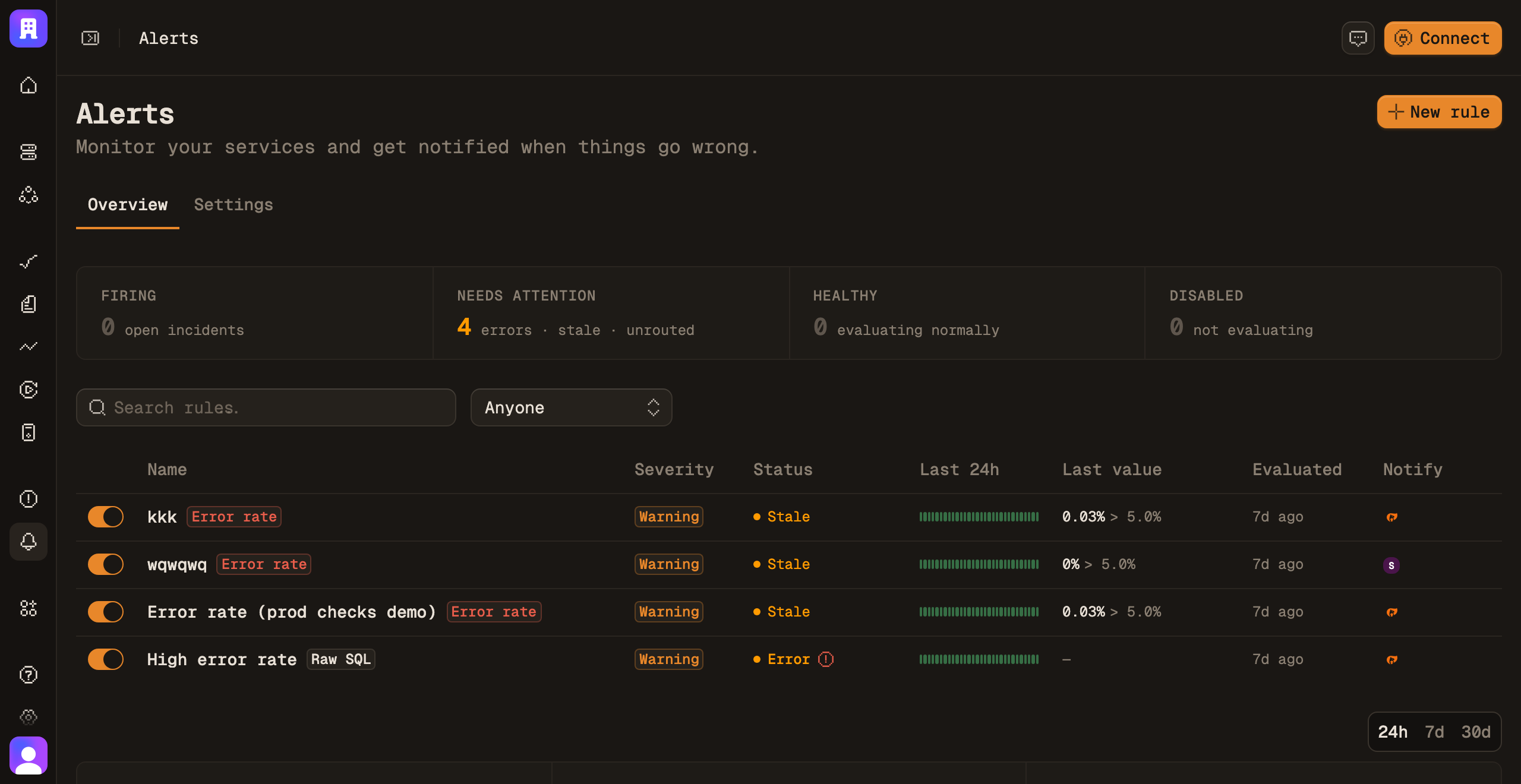
- alert T+0:00 · slocheckout p99 ≤ 200 ms
The alert states the breach, not the symptom
The rule is written against the SLO, so the notification carries the threshold, the observed value and the evaluation window. 380 ms against 200 ms, sustained across three windows.
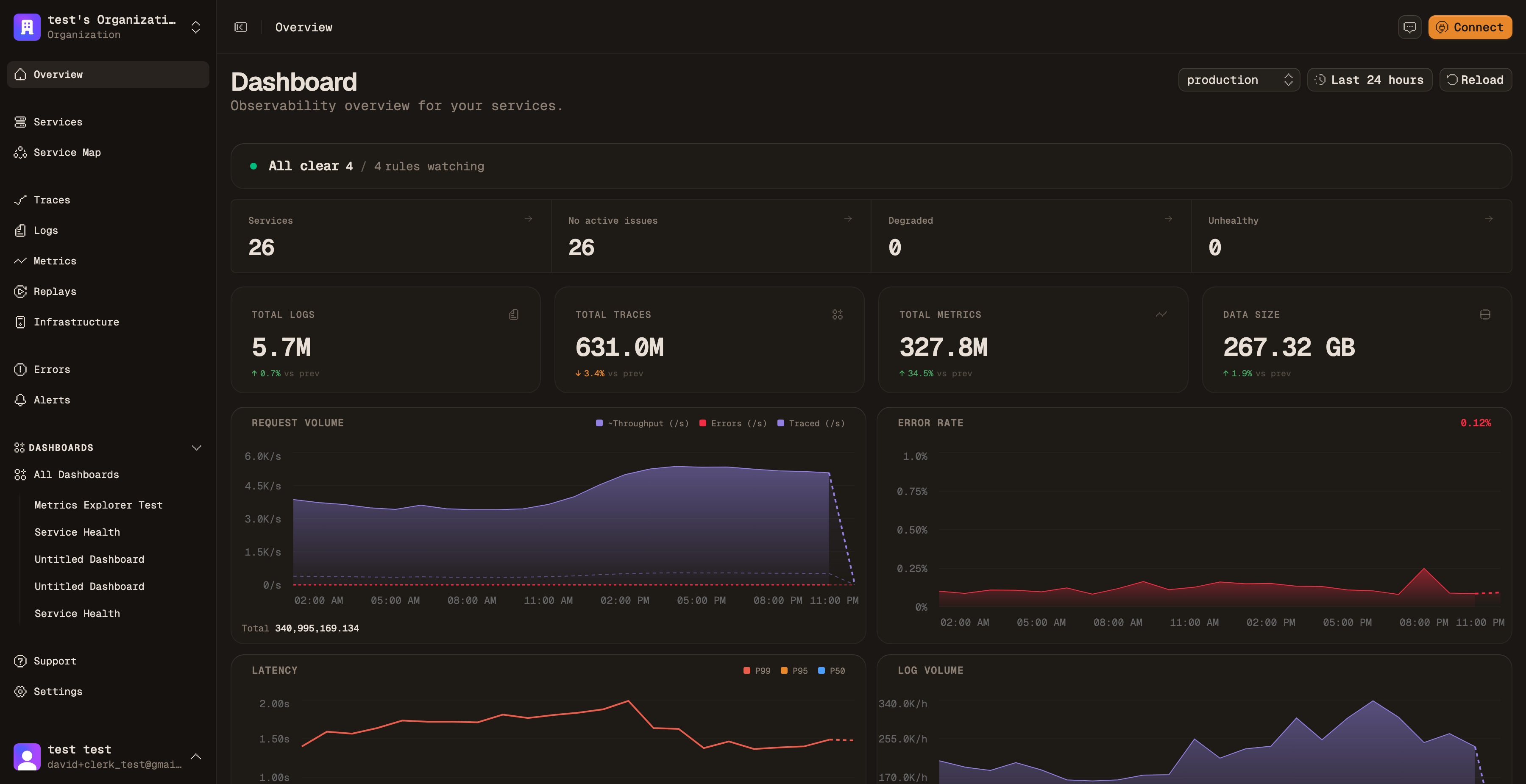
- dashboard T+0:40 · slocheckout p99 ≤ 200 ms
The dashboard narrows it to one endpoint
p50 has not moved. p99 has. That shape means a slow tail on one route rather than a service-wide slowdown, and the route breakdown names it: POST /checkout.
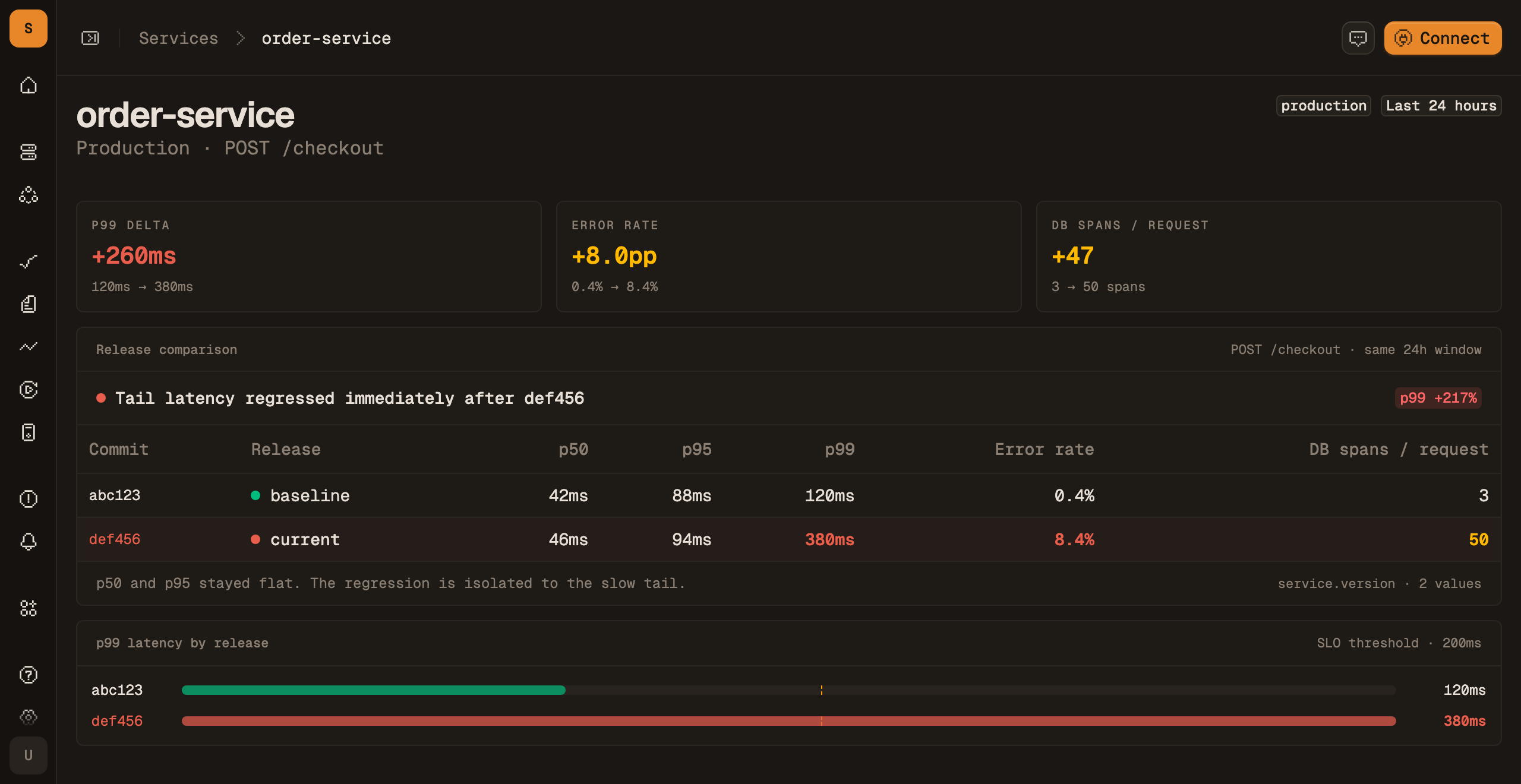
- releases T+3:15 · slocheckout p99 ≤ 200 ms
Two releases, side by side
Split the same endpoint by service.version and the step change has an owner: p99 120 ms on abc123, 380 ms on def456. The traces under def456 carry 50 db.query spans where the earlier ones carry 3.